Perioral dermatitis | Case studies
Periorbital Dermatitis: Natural Treatment That Actually Works
Free Shipping to Australia on orders over $100. Worldwide on Orders over $250. Dismiss
Jane’s story. Reviewed by Samantha Miller, Clinical Esthetician & Founder of The Naked Chemist · Updated 2026
Jane came to The Naked Chemist after months of struggling with periorbital dermatitis.
This is her recovery story, in her own words — reviewed by Samantha Miller.
It started as something small. A blemish. A little redness. Nothing alarming.
Then it spread. Burning, itching, flaking. The skin around my eyes no longer felt like my own.
I did what most people do: I tried to fix it. And that’s when it got worse.
A course of treatment calmed it at first, but six weeks later, it came back worse.
This is my natural treatment story for periorbital dermatitis.
How I calmed my inflammation, supported my gut, and rebuilt my skin barrier.
In This Article
Key Takeaways
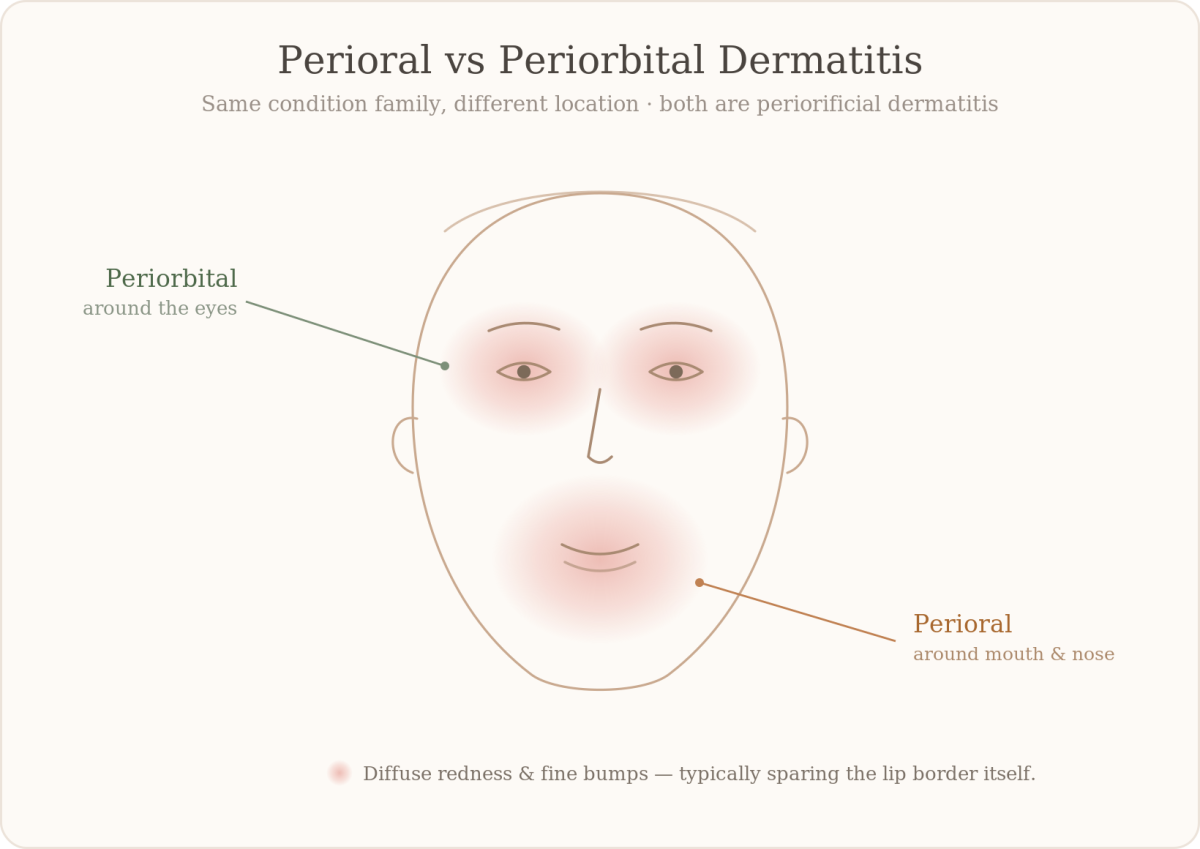
Periorbital dermatitis is an inflammatory rash around the eyes — redness, dryness, burning, flaking, and clusters of small bumps. It’s a close cousin of perioral dermatitis, which appears around the mouth and nose; both are forms of periorificial dermatitis and share the same triggers and the same barrier-first path to recovery.
The difference is mostly location, which matters, because the skin around the eyes is the thinnest on the face and the easiest to over-treat.
It is frequently mistaken for acne, rosacea, or eczema, which is where many people go wrong early on. If your symptoms sit mainly around the mouth rather than the eyes, start with the Naked Chemist perioral dermatitis guide to understand what’s happening beneath the surface — the mechanism is the same, but the routine differs around the eyes.
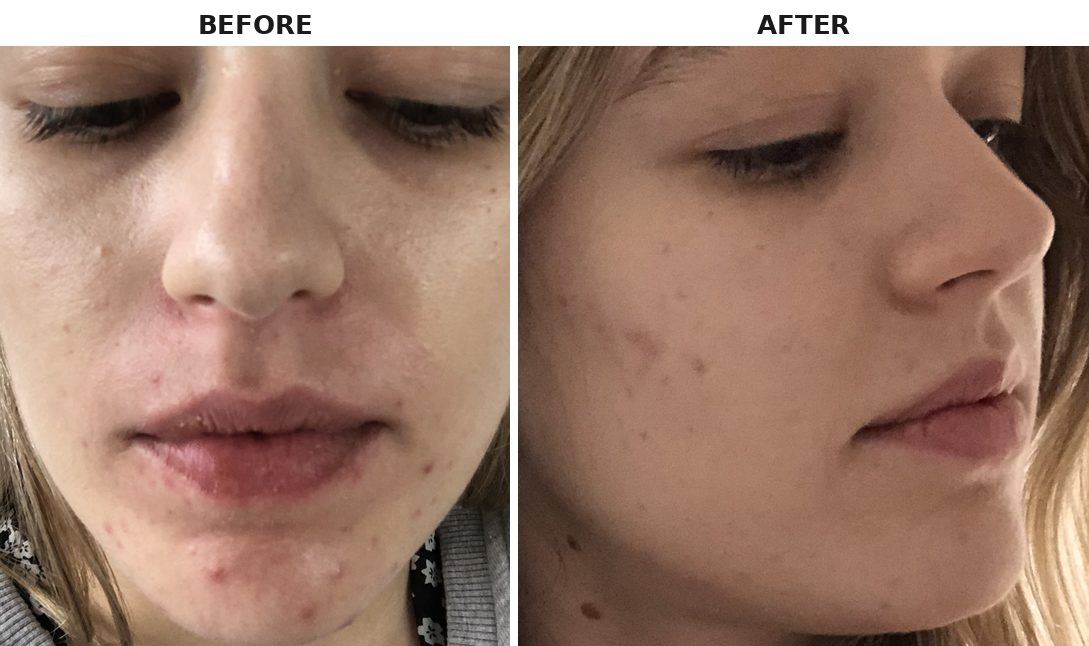 What began as a minor patch near my eye turned into widespread inflammation. Burning, itching, and flaking became constant.
Treatment calmed it at first. But six weeks later, it came back worse. I had temporary relief, followed by a stronger relapse.
Periorbital dermatitis is often triggered by over-treatment, not neglect. I was doing everything “right” — using good skincare, following advice — but over time, my skin became reactive, fragile, and unable to regulate itself.
Identifying triggers is essential — but can become overwhelming. I questioned everything:
Nothing worked consistently. That’s when I realised — it wasn’t just one trigger. It was cumulative overload, and my eye area was very inflamed.
I began to realise that natural treatment really comes down to simplifying everything — and being even gentler around the eyes than elsewhere.
The first shift was to reduce topical stress on my skin.
Internal factors played a significant role in my recovery. Hormones, stress, and gut health all influence inflammatory responses in my skin — something I initially underestimated.
Working with a naturopath, I stabilised this through targeted dietary changes, probiotics, fermented foods, and stress management. This became a real turning point for me — once internal inflammation began to settle, my skin became far less reactive and far more predictable.
A note on the eye area
Because this is the eye area, two cautions matter more than any product. Keep actives, exfoliants, and fragranced products well away from the eyes during recovery— migration into my eyes of any actives really irritated me. And if you have eyelid swelling, eye redness, watering, or any vision change, I suggest seeing a doctor straight away: periorbital symptoms can overlap with ocular rosacea, blepharitis, or contact dermatitis, which require a proper diagnosis rather than a skincare swap.
Once I stopped over-treating my skin, the biggest shift came from using fewer, more supportive formulations. Instead of trying to correct my skin, I focused on calming it, rebuilding the barrier, and allowing it to stabilise.
It was choosing the right kind of support and staying consistent. This was the real turning point: my skin stopped reacting… and slowly began to recover.
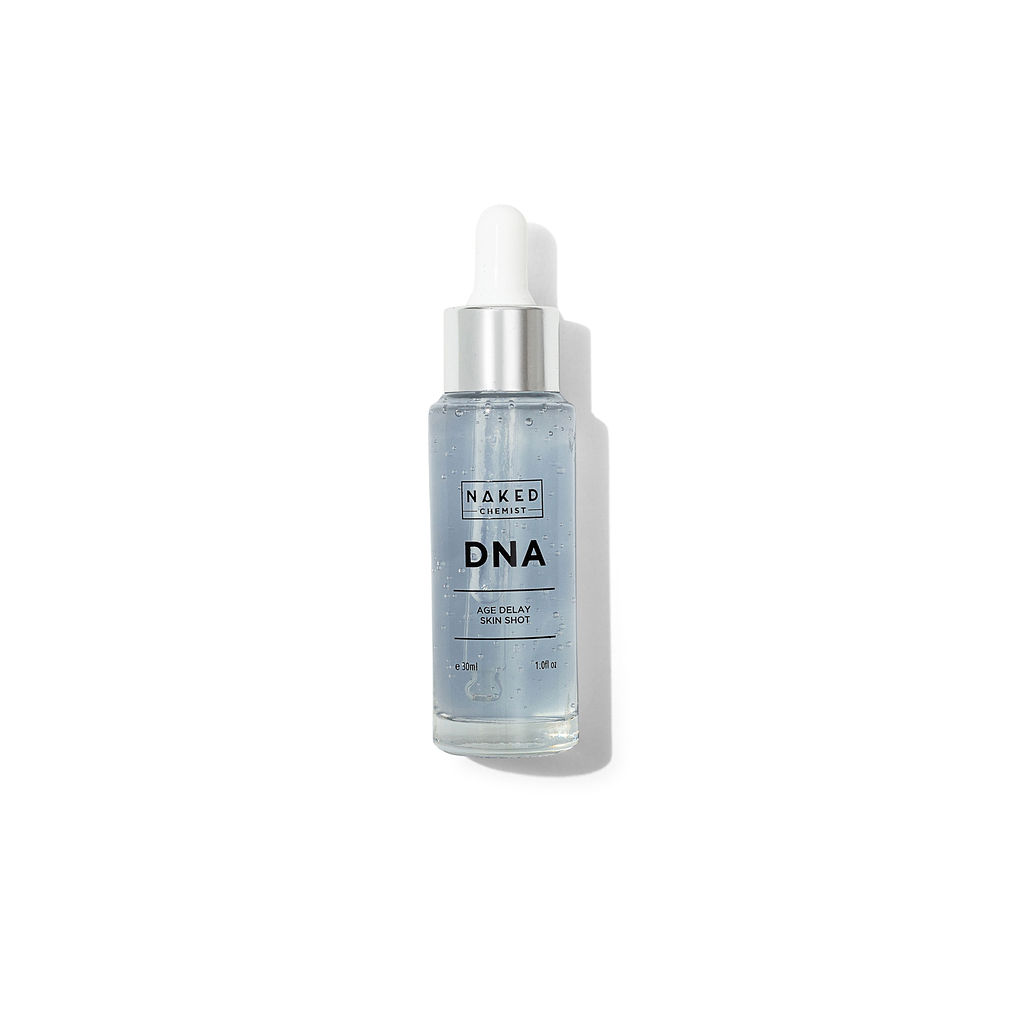 |
DNA Age Delay Skin Shot A strengthening treatment that helps build skin resilience and density — supporting a stronger, more robust barrier so the skin is better able to defend, repair, and hold itself stable over time. Best for: weakened, thinning, or fragile skin that needs strengthening and long-term resilience. |
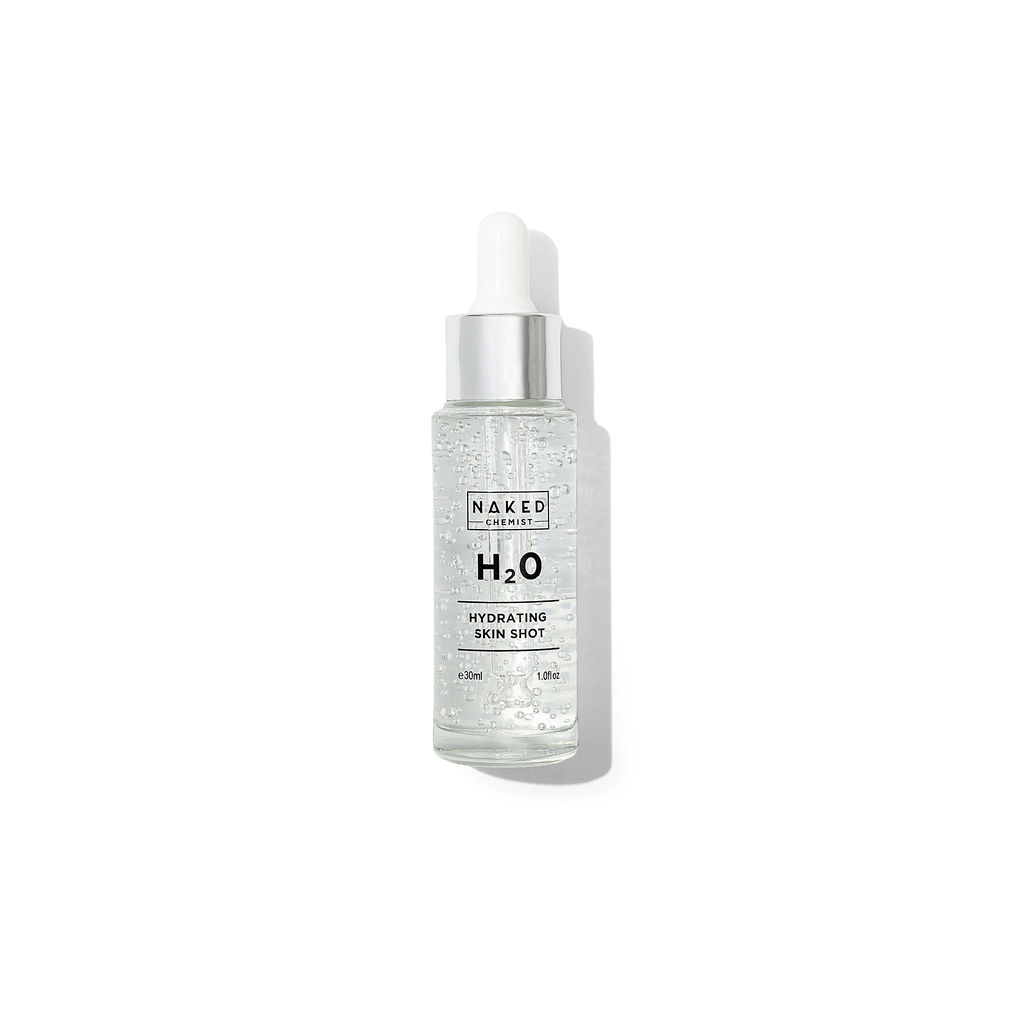 |
H2O Hydrating Skin Shot A hyaluronic-acid hydration boost that draws and holds water in the skin. Light and water-based, it delivers gentle moisture to tight, dehydrated, reactive skin without any heavy oils or occlusives to weigh it down. Best for: dehydrated, tight, reactive skin needing lightweight, barrier-friendly hydration. |
The biggest mistake I found was treating my periorbital dermatitis condition too aggressively — over-exfoliating my compromised skin, layering too many actives around my eyes, especially also applying heavy occlusives, really caused my skin to flare up.
And also relying on repeated cycles of antibiotics or steroids was a big mistake, a vicious cycle. I found that each aggressive step kept my barrier from recovering, so the rash lingers rather than settling.
Healing was gradual — and certainly not instant. This was my timeline; yours may differ:
That flare at week 12 felt like failure. It wasn’t. I found it was just part of my healing process.
For me, the turning point wasn’t finding something stronger. It was stepping back and simplifying, and allowing my skin space to recover instead of constantly asking it to perform.
Because once inflammation begins to settle and the barrier starts to rebuild, you will find that your skin starts to behave differently. It becomes less reactive, and far easier to manage.
All of this does take patience and consistency. And it takes trust — especially when progress doesn’t feel immediate. Your skin is not working against you; given the right conditions, it knows exactly how to repair, regulate, and restore itself.
I found that when I finally supported it in the way it actually needed, recovery stopped feeling like a struggle — and started to feel achievable.
What is the difference between periorbital and perioral dermatitis?
Periorbital dermatitis affects the skin around the eyes, while perioral dermatitis appears around the mouth and nose. They frequently overlap, share the same triggers, and respond to the same barrier-first natural treatment — so the distinction is more about location than approach. The eye area needs an even gentler hand.
What causes periorbital dermatitis?
A compromised skin barrier, irritation, topical steroids, and an imbalance in the microbiome usually cause it. It rarely comes down to a single trigger — more often it’s the cumulative load of too many products, actives, or steroid creams that tips reactive skin over the edge, which is why a natural approach to periorbital dermatitis treatment is so important.
How long does periorbital dermatitis take to heal naturally?
With a consistent natural treatment approach, most people see noticeable improvement within 6–8 weeks, though full recovery can take several months. A temporary flare around the halfway point is common and isn’t a setback — it’s part of the skin recalibrating as it stabilises.
Can toothpaste trigger periorbital dermatitis?
Yes. Fluoride and certain detergents in toothpaste are well-recognised triggers, especially for already compromised skin. Periorbital dermatitis natural treatment involves switching to a fluoride-free, SLS-free toothpaste is one of the simplest changes worth trying during recovery.
Should I stop all skincare if I have periorbital dermatitis?
Not entirely — but when it comes to periorbital dermatitis natural treatment, simplifying is essential. Your skin still needs gentle cleansing, light hydration, and barrier support. Stripping everything away can further shock reactive skin; the goal is fewer, kinder products used consistently, kept away from the eyes themselves.
Can periorbital dermatitis be treated naturally?
Yes. Periorbital dermatitis natural treatment focuses on removing triggers, calming inflammation, supporting gut health, and rebuilding the skin barrier — rather than suppressing symptoms with repeated cycles of antibiotics or steroids. It takes patience, but it addresses the root cause rather than masking it. If eye symptoms are involved, pair it with a proper medical check.
Disclaimer: This article is for informational purposes only and is not intended to diagnose, treat or cure any medical condition. Always patch test new products and consult your healthcare provider if uncertain.
2 replies on “Periorbital Dermatitis: Natural Treatment That Actually Works”
Hi!!! I would love to know what supplements you took if any and what skincare you used while breaking out with pd?
Hi sure can you email us at samjade888@gmail.com for a list of supplements that will help heal your skin you can send a photo there to us also. Everything is about simplicity when treating PD because its an elimination game. So the products used were a black soap we sell in the clinic, H20 hydrating skin shot. Clarify Balance & calm gel and Fortify barrier repair cream. Once healing was activated about 6 weeks in to the treatment she moved onto B+ skinshot and Xcell barrier repair oil. With PD avoid anything to occlusive and thick with butters in as this will feed the breakouts….