Ingredients
Coconut Oil Refined or Unrefined: Which is Best for Your Skin?
Free Shipping to Australia on orders over $100. Worldwide on Orders over $250. Dismiss
By Samantha Miller, Clinical Skin Therapist & Founder of The Naked Chemist | Updated: June 2026
You’d think buying coconut oil would be simple.
Then you’re standing in the aisle, jar in hand, squinting at words like virgin, fractionated, refined or unrefined coconut oil for skin?
And here’s the part nobody tells you: the label matters more than the brand.
The same coconut, processed in two different ways, yields two very different oils.
One that your skin can use, and one that mostly sits there.
After thirty years with my hands on skin, this is the question I’m asked more than almost any other. So let’s settle it properly.
Key Takeaways
The difference between refined and unrefined coconut oil comes down to one thing: processing. Unrefined oil is gently pressed from fresh coconuts and left largely intact. Refined oil is subjected to heat, bleaching, and deodorising, which strip it of its scent, colour, and most of its active compounds.
Everything else — how it feels, how it performs, whether it does anything for your skin — flows from that single fork in the road.
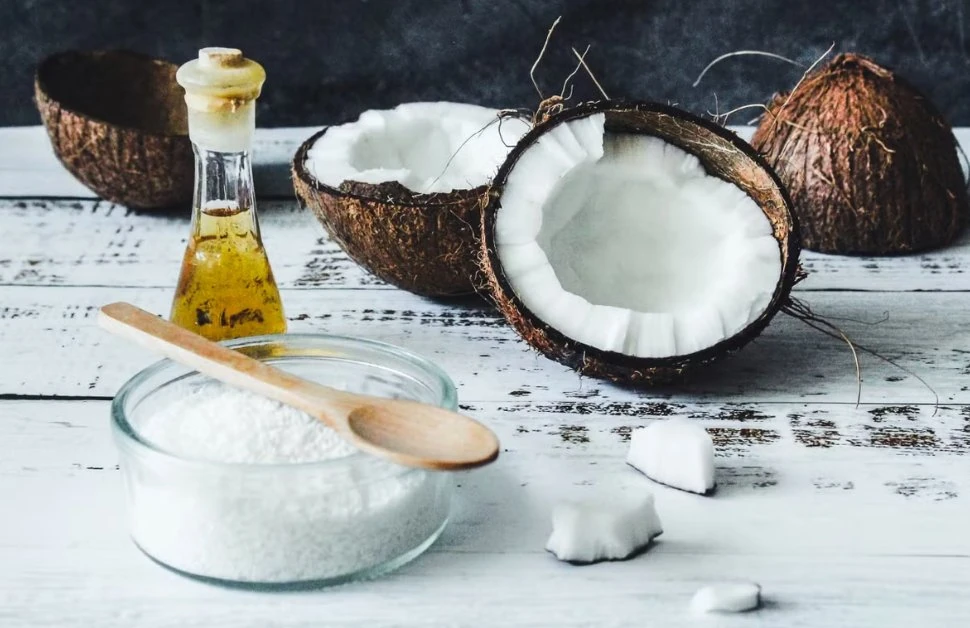
Virgin coconut oil is cold-pressed from fresh coconut flesh, usually by wet-milling. The gentle method preserves the oil’s full spectrum of phytochemicals and antioxidants, and that unmistakable sweet coconut scent.
That scent isn’t just pleasant — it’s a quality signal. It tells you the polyphenols and lauric acid survived. These are the compounds with a genuine affinity for skin: soothing, antioxidant, and moisture-trapping.
Virgin coconut oil melts the moment it touches warm skin, which is one of the easiest ways to spot the real thing.
Refined coconut oil is extracted from dried coconuts (copra), then bleached and deodorised — often labelled RBD (refined, bleached, deodorised). The result is a neutral, scentless oil with a long shelf life.
The trade-off is everything that made it worth using. Refining removes most antioxidants and polyphenols, and some refined oils retain traces of trans fats from the process. What’s left is a cheap, stable cooking oil — fine for the kitchen, far less interesting for your skin.
This is the part most people miss: a jar labelled “coconut oil” is almost always refined. The word that matters is virgin.
For skin, unrefined virgin coconut oil is the better choice — it contains up to 7 times more polyphenols than refined oil, along with lauric acid and antioxidants that add value, as this article demonstrates. But “better” still comes with an honest caveat about who should use it.
Virgin coconut oil suits dry, flaky or rough skin, where its occlusive nature helps seal in moisture. There’s reasonable evidence that it can ease the dryness and itching of eczema, partly by reducing Staphylococcus aureus, which aggravates it.
Refined coconut oil, with its neutral scent, is better suited to body care or hair — places where you don’t need actives and the lack of fragrance is handy.
Barrier Repair Balm
Where coconut oil sits on the surface, Barrier Repair Balm works with the skin — replenishing the lipids that rebuild the wall, keeping moisture in and irritants out, without the comedogenic risk of an occlusive oil.
Best for: dry, sensitive or compromised skin that needs real repair, not just a seal.
So, is it refined or unrefined Coconut Oil for Skin? Well, as we can see, not a ll coconut oil is honestly labelled. Some refined oils are marketed as “virgin” to boost prices, so it pays to know the tell.
Scent: Real virgin coconut oil has a distinct, sweet coconut aroma. Little to no smell means it’s been refined.
Melting point: genuine virgin oil melts at around 24°C (76°F) and turns liquid instantly between your palms. If it stays stubbornly solid, be suspicious.
Label: look for “cold-pressed,” “unrefined,” “virgin”, or “organic.” Avoid anything that’s fractionated or says “coconut oil.”
Most coconut oil mistakes come from treating it as a do-everything miracle. It isn’t one — it’s a single, fairly blunt ingredient with a couple of genuine strengths.
Using it on oily or acne-prone skin. The comedogenic risk is real. If you break out easily, this is the wrong oil.
Relying on it as a barrier treatment. Coconut oil seals moisture in, but it doesn’t rebuild the barrier itself. If your skin is genuinely compromised, you need barrier lipids, not an occlusive layer.
Buying refined and expecting virgin results. If you want the antioxidant and soothing benefits, the processing has to be right. Refined doesn’t carry them.
Founder Insight
“Coconut oil is misunderstood. Refined or unrefined coconut oil for skin is an occlusive that traps water against the skin, which is wonderful on dry shins and rough heels, and a recipe for breakouts on an oily face. The mistake is treating one ingredient as a whole routine. Know what it does, use it where it fits, and stop expecting it to repair a barrier it was never built to fix.”
— Samantha Miller, Clinical Skin Therapist, 30+ years in practice
If you’ve been reaching for coconut oil to calm reactive, tight or compromised skin and it isn’t working, that’s not a failure on your part — it’s the wrong tool. Skin that’s struggling needs its barrier rebuilt, not sealed over. That’s the whole idea behind how I formulate: support the skin’s own structure rather than smother it.
When it comes to refined or unrefined coconut oil for skin, unrefined virgin oil wins every time — it keeps the antioxidants, polyphenols and lauric acid that refining strips away. But coconut oil is a sealant, not a saviour.
It’s lovely on dry skin and best avoided on oily, breakout-prone skin.
Choose virgin, use it where it fits, and don’t ask one humble oil to do the job of a proper barrier routine.
When understanding refined or unrefined coconut oil for skin, refined coconut oil is gentle and neutral, but refining strips most of its antioxidants and polyphenols, so it offers little active benefit. It’s fine as a basic body moisturiser on non-sensitive skin, but unrefined virgin oil is the better choice for the face.
Should it be refined or unrefined coconut oil for skin? Unrefined virgin coconut oil is best for skin. Cold-pressed from fresh coconuts, it retains the lauric acid, antioxidants, and polyphenols that give it soothing and moisture-sealing benefits — provided your skin isn’t oily or acne-prone.
Unrefined (virgin) coconut oil is minimally processed and keeps its scent, colour and active compounds. Refined coconut oil is bleached and deodorised, which removes the scent and most of the beneficial compounds but gives it a longer shelf life.
It’s best avoided. Both refined and unrefined coconut oil are comedogenic, meaning they can clog pores and trigger breakouts. If you have oily or acne-prone skin, a non-comedogenic barrier cream is a safer choice.
Yes — coconut oil’s lauric acid bonds with hair protein and penetrates the shaft, making it an excellent conditioner and pre-shampoo treatment. You can read more in our guide to coconut oil for hair.