Understanding skin
How Wellness Therapy is Shaping Skin Health

Free Shipping to Australia on orders over $100. Worldwide on Orders over $250. Dismiss
By Samantha Miller, Clinical Esthetician & Founder of The Naked Chemist | Updated: April 2026
“I’m doing everything right — so why does my skin still feel off?”
I hear this almost daily in the clinic.
And it’s usually coming from someone who is genuinely trying.
Good products. A consistent routine.
They even turn to wellness therapy to support their skin from the inside out.
So what I see isn’t a lack of effort, it’s skin that has been pushed too far.
Reactive. Sensitive. Unpredictable.
Not because you’re doing too little — but because your skin is dealing with too much.
This is the pattern I call skin exhaustion, and understanding it is where real, lasting skin health begins.
Science has always begun with observation of the natural world.
Long before laboratories, the most significant discoveries came from watching how living systems maintain themselves — how they adapt, repair, and restore equilibrium when disrupted.
Your skin operates by exactly these same principles. It is a living system with its own regulatory intelligence: adjusting oil production, managing hydration, mounting an immune response, and repairing damage.
It does all of this continuously, and largely without our help — provided we give it the right environment to work in.
The problem is that modern skincare, and increasingly modern wellness therapy, often works against this intelligence rather than with it.
More actives. More treatments. More intervention. The result is skin that is overstimulated, under-resourced, and unable to do what it was designed to do.
Here’s where it goes wrong: we mistake activity for progress. A skin that is visibly reacting — flushing, breaking out, feeling tight — looks like it needs more treatment. Usually it needs less and better.
The skin isn’t a passive surface. It’s a dynamic ecosystem composed of lipids, water, proteins, and a microbiome of billions of microorganisms that collectively manage barrier function, immune regulation, and inflammatory response.
When this ecosystem is balanced, skin is calm, resilient, and self-correcting.
When it’s disrupted — through overuse of actives, inappropriate wellness treatments, chronic stress, or nutritional deficiency — that balance breaks down.
Symptoms follow: sensitivity, breakouts, dehydration, and redness that won’t resolve.
The microbiome alone is worth understanding properly. Research increasingly shows that the bacterial communities living on our skin are not incidental — they actively modulate the immune response, synthesise lipids essential to barrier function, and regulate pH.
Disrupting them through harsh cleansers, excessive exfoliation, or repeated heat-based treatments has consequences that take weeks to months to reverse.
This is the principle that governs every decision we make in formulation and every recommendation we give in the clinic.
Before introducing any wellness therapy — whether that’s red light therapy, LED therapy, dietary supplementation, or stress management practices — the skin barrier needs to be in a functional state. A compromised barrier can’t benefit from stimulation. It can only react to it.
Support the barrier first. Build it back to a state of integrity. Then, and only then, introduce treatments and therapies that encourage the skin to perform at a higher level.
The most effective approach to skin health doesn’t pit clinical science against natural ingredients. It uses both intelligently and in sequence.
Ceramides restore the lipid matrix that forms the physical structure of the barrier. Without adequate ceramides, water escapes, irritants penetrate, and the inflammatory cascade that drives breakouts, sensitivity, and accelerated ageing has no structural defence against it.
Niacinamide (B3) is one of the most comprehensively studied skin actives available. It regulates sebum, calms inflammation, inhibits pigment transfer, and strengthens the barrier — all at the same time. It’s also one of the most biocompatible ingredients in skincare, tolerated across virtually every skin type.
Botanical actives — when properly extracted and standardised — bring their own clinical value. Manuka accelerates wound healing and collagen synthesis. Green tea polyphenols are among the most potent anti-inflammatory antioxidants studied in dermatology. Bakuchiol provides vitamin A-comparable results without the retinoid irritation response.
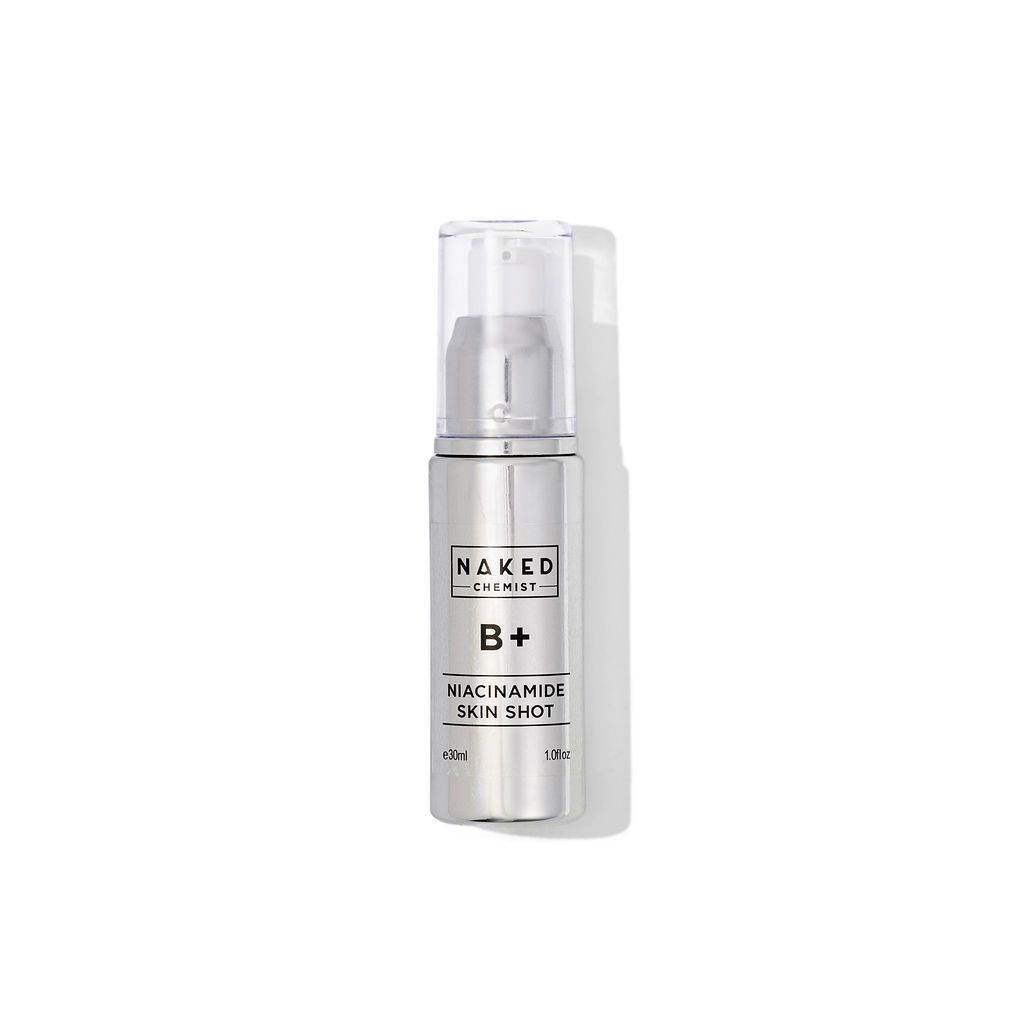
Recommended: B+ Niacinamide Skin Shot
A concentrated niacinamide treatment that regulates sebum, calms inflammation, and strengthens the skin barrier — without disrupting its delicate balance. Formulated to support the skin’s natural intelligence rather than override it.
Best for: Reactive, congested, oily, and barrier-compromised skin types.
The synergy between these categories is real and measurable. This is science in nature made practical — not a philosophy, but a formulation strategy.
Wellness therapy has moved from the fringes to the mainstream of skin health, and rightly so. The evidence base for several approaches is now strong enough to take seriously.
Red light therapy uses specific wavelengths — typically 630–660nm for surface skin concerns and 810–850nm for deeper tissue — to stimulate mitochondrial activity in skin cells.
Clinical research published in Seminars in Cutaneous Medicine and Surgery supports its role in reducing inflammation, accelerating healing, and supporting collagen synthesis.
Used correctly on prepared skin, it is one of the best-evidenced non-invasive skin treatments available.
Nutrition and supplementation directly influence skin function. Omega-3 fatty acids reduce inflammatory prostaglandins. Zinc supports barrier repair and sebum regulation.
Vitamin D modulates immune function and oil gland activity. Probiotics, particularly Lactobacillus rhamnosus, have demonstrated measurable reductions in acne severity through the gut-skin axis.
Stress management is the one that most people underestimate. Chronic cortisol elevation disrupts the barrier, increases sebum production, suppresses immune regulation, and accelerates collagen breakdown. No topical routine can fully counteract the skin effects of chronic psychological stress. Managing stress isn’t a lifestyle nice-to-have — it’s a clinical intervention.
Here’s what most wellness brands won’t tell you. The same treatment that produces remarkable results on healthy, barrier-intact skin can worsen sensitivity, trigger inflammation, and delay healing on compromised skin.
Red light on reactive, stripped skin can amplify that reactivity. Nutritional supplementation on a system dealing with chronic inflammation may not deliver the expected results until that inflammation is addressed first. Heat-based treatments on a damaged barrier remove the thin protective film before the skin has rebuilt it.
Context matters as much as the treatment itself. The sequence is everything.
The patterns that bring people to the clinic in a worse state than when they started are remarkably consistent.
Layering too many activities simultaneously. When retinol, AHAs, vitamin C, and niacinamide are used together without proper sequencing, they overwhelm the skin’s capacity to adapt. The result is a compromised barrier masquerading as a “purge” — and people push through it, making everything worse.
Introducing wellness therapy before the barrier is stable. This is particularly common with at-home LED devices and heat-based tools. Used on inflamed or sensitive skin, they accelerate the very problem they’re meant to solve.
Expecting rapid results and abandoning protocols too soon. Skin cell turnover takes approximately 28 days. Meaningful change in barrier integrity, sebum regulation, or inflammatory patterns takes 8–12 weeks of consistent, targeted support. Changing your approach every three weeks means you never allow any single approach to show what it can do.
Confusing more products with better results. A ten-step routine isn’t evidence of commitment; it’s often evidence of anxiety.
The most clinically effective routines we see in practice are the simplest. Three to five well-chosen products, applied consistently, outperform complex routines almost every time.
Sound familiar? You’re not alone.
Founder Insight
Samantha Miller — Clinical Esthetician with 30+ years of experience & Founder of The Naked Chemist
“The biggest improvements I see in clinic almost always come from simplifying — not adding more. When someone commits to a barrier-first routine, removes the conflicting activities, and gives the skin eight weeks of genuine support, the transformation is consistent and lasting. Wellness therapy then becomes a genuine amplifier rather than another variable the skin has to manage. That sequence changes everything.”
Wellness therapy is not a shortcut. And science in nature is not a passing trend.
Together, they represent something far more enduring — a way of understanding your skin as the intelligent, self-regulating system it actually is, rather than as something to constantly correct or control. This is where the shift begins.
Moving away from treating isolated symptoms, and towards rebuilding the skin itself — its barrier, its resilience, its ability to function the way it was designed to. That shift doesn’t happen overnight, and it’s not meant to.
It requires a willingness to simplify your approach. To step back from over-layering, over-treating, and overthinking. To recognise that more is not always better — and often, it’s the reason your skin feels stuck.
Because when your skin is given the right environment — consistent care, supportive ingredients, and intelligently applied wellness therapy — it begins to respond in a very different way.
The barrier repairs and the skin is calm and balanced. When the barrier is strong, wellness therapy works. When the ecosystem is balanced, your skin becomes easier to manage, not harder.
And perhaps most importantly — when you stop fighting your skin and start understanding it — everything changes.
Because real, lasting results have never come from force. They come from working with your skin, and never against it.
FAQ
Wellness therapy includes evidence-based approaches — such as red light therapy, nutritional supplementation, stress management, and gut health support — that address the internal and environmental drivers of skin health. It works best alongside, not instead of, a barrier-first topical routine.
Yes, when used incorrectly or on a compromised barrier. Red light therapy, heat-based treatments, and aggressive supplementation can worsen sensitivity and inflammation if the skin isn’t in a stable state first. The sequence and context of any treatment matter as much as the treatment itself.
Skin exhaustion is the state of chronic reactivity that develops when the skin has been consistently over-treated — too many actives, too many treatments, not enough barrier support. The skin loses its ability to self-regulate, and symptoms such as sensitivity, breakouts, redness, and dehydration become persistent.
Typically 4–8 weeks with consistent barrier-first care — a simplified routine focused on ceramides, humectants, and anti-inflammatory actives. During this period, wellness therapies should be gentle and supportive rather than stimulating.
It’s not an either/or. The most effective approach uses both clinically validated ingredients that support barrier function, alongside botanical actives with documented anti-inflammatory and healing properties. The question isn’t natural versus synthetic; it’s whether an ingredient works with the skin’s biology or against it.
Red light photobiomodulation, omega-3 and zinc supplementation, probiotic support (particularly *Lactobacillus rhamnosus*), and cortisol management all have meaningful clinical evidence behind them. Vitamin D optimisation is particularly impactful for those with acne or inflammatory skin conditions.