Natural ingredients | Bio-identical ingredients
Hyaluronic Acid Benefits: 7 Ways It Transforms Your Skin

Free Shipping to Australia on orders over $100. Worldwide on Orders over $250. Dismiss
By Samantha Miller, Clinical Esthetician & Founder of The Naked Chemist | Updated: April 2026.
Are you concerned with dull, dry skin?
Or maybe you’re looking to give it a genuine moisture boost.
Here’s a beauty secret worth knowing: glorious, skin-plumping hyaluronic acid hits the mark every time.
Seriously — it’s like the holy grail of skincare.
And the reason it’s on the beauty industry’s radar is its magical ability to retain moisture.
So join us as we take a closer look at the benefits of hyaluronic acid.
To determine whether this clever molecule really does live up to the hype.
Hyaluronic acid (HA) is a naturally occurring sugar molecule found throughout your body — in your skin, connective tissue, joints, and eyes. In the skin, it acts as a water reservoir, keeping cells hydrated, plump, and supple.
It’s a superstar hydrator that pulls moisture from the air and holds 1,000 times its weight in water.
Yet sadly — just like collagen and elastin — the amount of naturally occurring hyaluronic acid in your body decreases with age. By your mid-twenties, production begins to slow. By your forties, levels can be half of what they were in your teens.
But don’t panic. All is not lost. It is entirely possible to top up what Mother Nature has already given us — in the form of a serum, cream, or even an injectable.
That’s what makes hyaluronic acid one of the most exciting ingredients in skincare. It’s not just a trend. It’s a genuine anti-ageing elixir that keeps on giving.
Hyaluronic acid combats signs of ageing by retaining water, plumping the skin, and reducing the appearance of fine lines and wrinkles — making a quality hyaluronic acid serum like this lovely formula an essential step in hydration-focused skincare routines.
Here’s the quick overview before we dive deeper:
Anti-ageing — retains water, plumps skin, reduces the appearance of lines and wrinkles
Healing — supports tissue repair after sun damage, wounds, and breakouts
Barrier restoring — seals gaps between skin cells to prevent moisture loss, inflammation, and infection
Acne-reducing — calms inflamed breakouts and helps regulate excess sebum production
Deep hydration — draws moisture into the skin and binds it there throughout the day
injectable gold standard — widely considered one of the safest and most natural-looking filler options
Multitasking — effective in serums, gels, moisturisers, and masks for every skin type
So let’s take a closer look at each one.
If you’re keen to learn about humectants and hyaluronic acid in skincare, then our article covers everything you need to know.
Because supplies of natural hyaluronic acid dwindle with age, the skin becomes drier and more susceptible to visible signs of wear and tear.
Hyaluronic acid’s soft, jelly-like substance fills the gaps between collagen and elastin fibres — giving your skin that much-needed suppleness. Chronic dehydration is also a significant factor as we age. One of the most visible effects? A loss of firmness. Hello, lines and wrinkles.
HA spheres work by grabbing onto water molecules from your skin and the surrounding air. This swelling effect plumps the skin from the surface, softening lines and restoring that youthful, rested look we’re all after.
In a 2014 clinical study, women who applied hyaluronic acid daily for eight weeks saw a **40% decrease in lines and wrinkles** and over a 50% improvement in skin density, elasticity, and firmness compared to those who didn’t apply it. We think you’d agree — those are impressive results.
If you’ve been a sun worshipper all your life, your skin may be drier, thicker, and more damaged than someone who hasn’t had much sun exposure. The technical term is photoageing — and it’s one of the more stubborn concerns to address.
Fortunately, hyaluronic acid has multiple biochemical roles in both minor and more significant skin repair, including in the presence of sun damage.
It creates a physical protective barrier that helps restore, soothe, and calm sun-damaged skin. A 2016 study suggested that applying hyaluronic acid regularly can help regulate tissue repair and calm inflammation.
And here’s something most brands won’t tell you: the molecular weight of your HA matters enormously for sun-damaged skin. High molecular weight hyaluronic acid — like the kind in our H2O formulation — won’t penetrate your skin barrier. Instead, it creates a hydrating film over the surface, keeping skin firm, youthful, and glowing while your barrier quietly heals underneath.
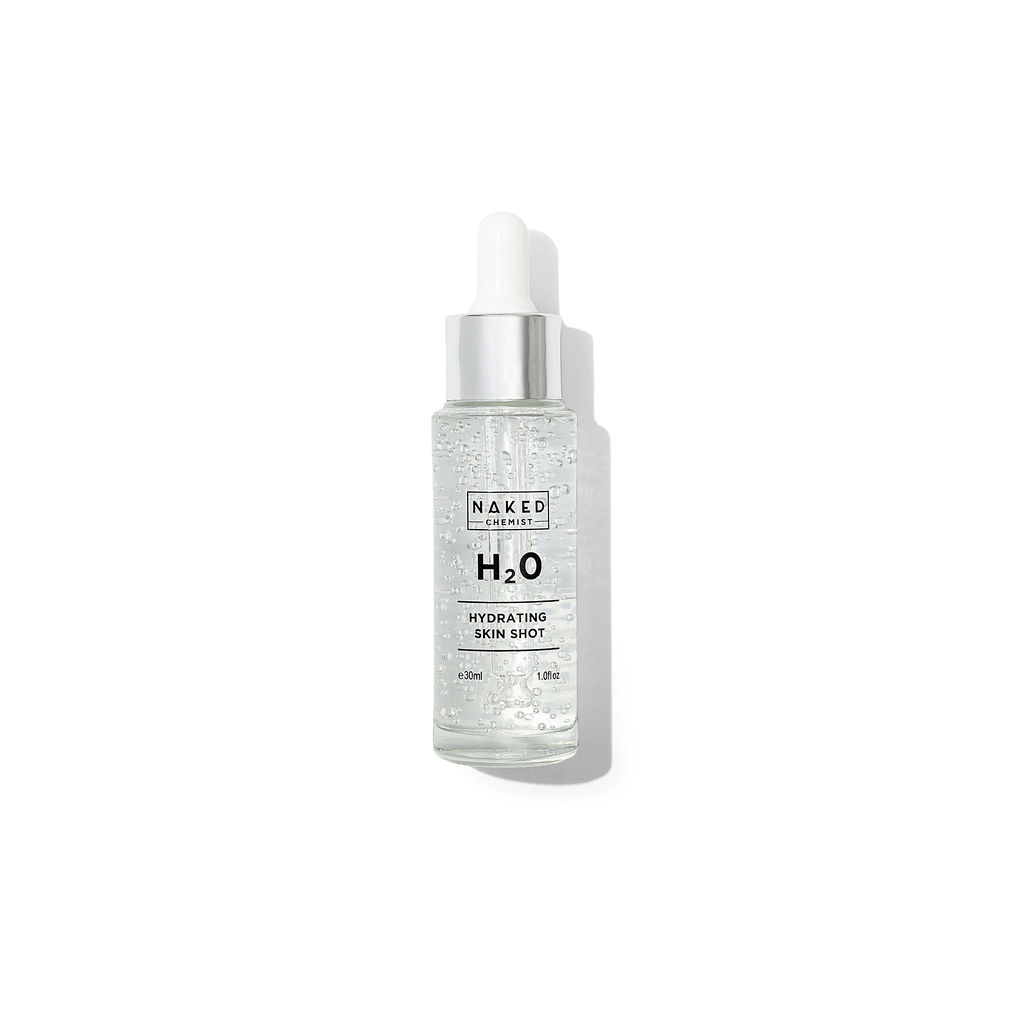
A damaged barrier function is the culprit in many common skin concerns — from sensitivity and redness to premature ageing and recurrent breakouts.
This protective barrier is critical. **It locks in moisture while deterring unfriendly bacteria**, and traps essential nutrients, growth factors, and anti-inflammatories close to the skin’s surface.
Applying hyaluronic acid regularly creates an interlinked network of molecules that increases moisture levels in damaged skin. This includes a hydrated visco-elastic film — permeable to air — that acts as a temporary barrier while your skin builds its own back up.
This is the barrier-first approach in action. Rather than forcing the skin to perform, you’re giving it the conditions it needs to repair itself.
Here’s the part that surprises people. If you have oily or combination skin, you might assume that hydrating ingredients have no place in your routine. That assumption is costing you clarity.
Oily skin is almost always dehydrated beneath the surface — and that dehydration triggers excess sebum production as a compensatory response. Restore proper hydration, and overproduction tends to settle.
Disruption in the skin’s barrier function can also cause breakouts. Gaps in this protective wall allow bacteria to penetrate, triggering inflammation. Because hyaluronic acid’s primary role is to prevent water loss, it helps seal those gaps — especially when combined with ceramides and lipids.
Suppose you want to go all out on everything hyaluronic acid. If so, our Quench Plumping Peptide Gel is a perfect choice. It contains many of these barrier-repairing ingredients and can be layered over H2O for some serious skin-plumping results.
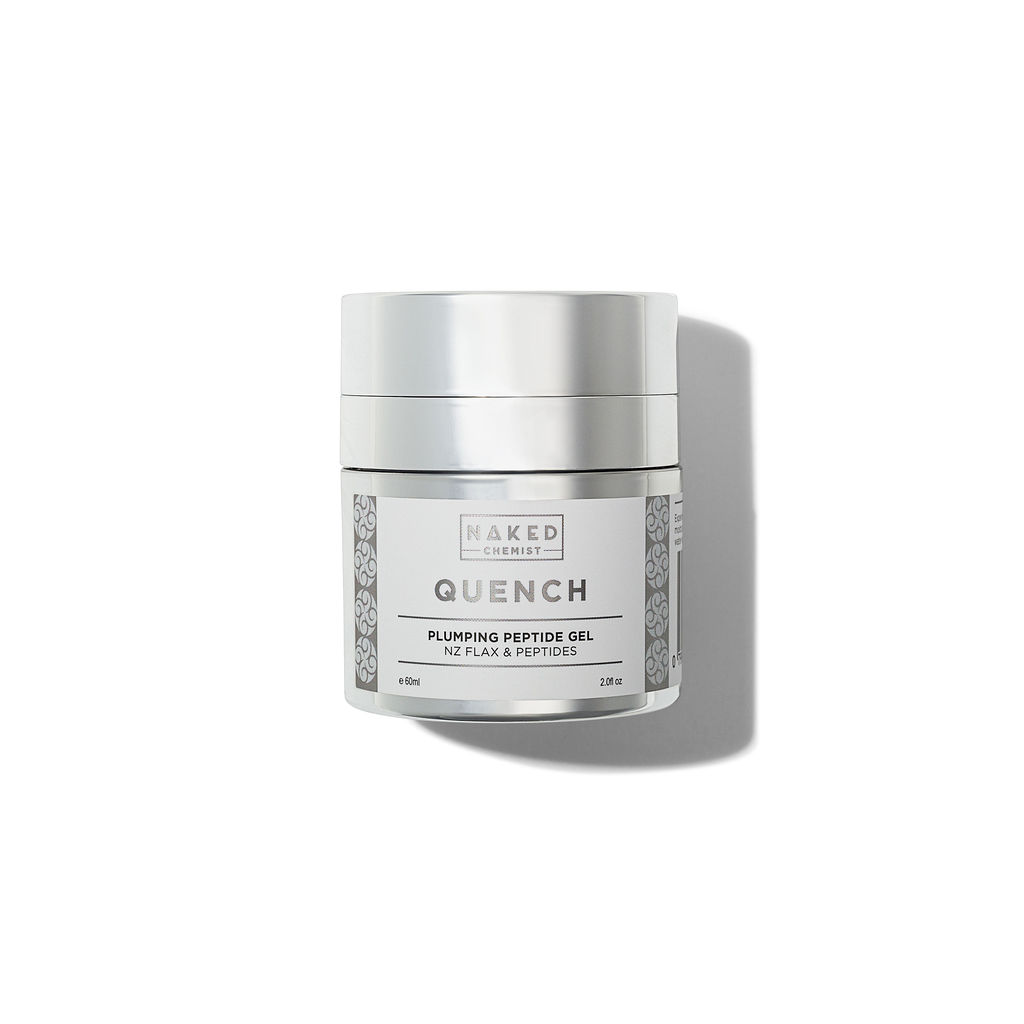
This one sounds obvious — but it’s the foundation for everything else.
Hyaluronic acid is the most effective humectant in skincare.
A humectant actively draws moisture toward itself and binds it to skin cells, rather than simply creating a surface barrier. The difference is noticeable: skin stays genuinely hydrated throughout the day, not just immediately after application.
If you have dry, mature, or dehydrated skin, hyaluronic acid should be a non-negotiable in your routine. Natural levels are depleted with age — replenishing them topically keeps your skin dewy, youthful, and healthy.
Collagen injectables of yesteryear didn’t stand the test of time, so they were replaced with hyaluronic acid fillers. And for good reason.
Because your body already produces HA naturally, injectables like Restylane or Juvéderm are exceptionally well tolerated.
They add volume to hollow areas, smooth fine lines, and reduce the shadows that come with age-related volume loss. Over approximately 12 months, the filler dissolves naturally without residual effects.
The HA spheres also draw water into the treated area, creating a secondary filling effect from hydration. It’s elegant, effective, and reversible — which is why it remains the gold standard in aesthetic medicine.
Possibly effective. But probably not for your skin.
While hyaluronic acid supplements are widely available, research suggests that only a small fraction reaches the skin — approximately 90% is excreted through urine before it can have any meaningful effect. Some does reach the joints and eyes, which may be relevant for those concerns.
For skin, the evidence firmly supports topical application as the most effective route.
The best hyaluronic acid for your skin is the kind that sits on top of it. For internal support, bone broth and gelatine-rich foods offer a more bioavailable starting point.
This is the part most people miss — and it’s more important than which products you use.
Applying HA to completely dry skin. Hyaluronic acid needs water to work — it draws moisture toward itself. In a dry environment with no moisture to draw from, it can pull water from deeper layers of the skin instead, leaving you feeling tighter than before. Apply to slightly damp skin, or mist your face first.
Choosing the wrong molecular weight. Not all hyaluronic acid is created equal. Low-molecular-weight HA penetrates more deeply but can trigger inflammation in sensitive or compromised skin.
High-molecular-weight HA stays at the surface, creates a hydrating film, and is generally better tolerated — particularly for damaged barriers.
Skipping the seal. Hyaluronic acid draws moisture in, but without a barrier-supporting layer on top, that moisture evaporates. Always follow your HA serum with a gel or moisturiser.
Quench layered over H2O is exactly what is done properly.
Expecting overnight results? Then, consistent daily use over four to eight weeks is where clinical studies measure meaningful change. One application tells you very little.
Samantha Miller Founder of The Naked Chemist.
Hyaluronic acid is one of the very few ingredients I have never stopped recommending in thirty years — not because it’s fashionable, but because it works consistently across every skin type, without compromise. The key is knowing how to use it: the right molecular weight, applied to damp skin, layered correctly. When those conditions are met, the results speak for themselves.”
There are so many excellent hyaluronic acid benefits for the skin — and the evidence behind them is compelling. It hydrates deeply, plumps visibly, comforts sensitised skin, supports repair, and helps strengthen the barrier that keeps your complexion calm, smooth, and resilient. Few ingredients are as universally beneficial or as consistently well-tolerated across so many skin types and concerns.
Used properly — on damp skin, at the right molecular weight, and layered intelligently with barrier-supporting ingredients — hyaluronic acid becomes far more than a simple hydrator.
It creates the ideal environment for skin to function at its best. And when the skin is well hydrated, everything improves: fine lines appear softer, texture looks smoother, sensitivity often settles, and the complexion takes on that fresh, healthy fullness that is so often lost with age and dehydration.
This is why hyaluronic acid continues to stand the test of time. It is not a gimmick, and it is not just another passing skincare trend. It is a foundational ingredient that works in harmony with the skin, helping restore what everyday stress, environmental exposure, and ageing gradually take away.
If you want skin that looks fresher, feels more comfortable, and is better equipped to defend itself, hyaluronic acid deserves a permanent place in your routine. It is, quite simply, one of the most reliable ways to support long-term skin health — and that is exactly why it remains a true skincare essential.
1. What does hyaluronic acid actually do for your skin?
It functions as a humectant — drawing moisture from the environment and binding it to skin cells. This plumps the skin, softens the appearance of fine lines, supports barrier repair, and improves texture and firmness with consistent use.
2. Is hyaluronic acid good for oily and acne-prone skin?
Yes. Oily skin is often dehydrated beneath the surface, which triggers the overproduction of sebum. Hyaluronic acid restores hydration without adding oil, helps regulate sebum, and supports barrier repair, reducing the inflammatory pathway behind breakouts.
3. How long does hyaluronic acid take to work?
Some plumping effects are immediate. Meaningful improvements in skin density, elasticity, and line reduction are typically visible after four to eight weeks of consistent daily application — as confirmed by the 2014 clinical study showing a 40% reduction in wrinkles at the eight-week mark.
4. What is the difference between high and low molecular weight hyaluronic acid?
High-molecular-weight HA (like in H2O) sits on the skin’s surface and creates a protective, hydrating film — ideal for barrier support and overall hydration. Low-molecular-weight HA penetrates more deeply but can cause inflammation in sensitive skin. Many high-quality formulations use both.
5. Can you use hyaluronic acid every day?
Yes — it is one of the few skincare ingredients suitable for twice-daily use across all skin types. It does not cause sensitivity, retinol-like purging, or barrier disruption when used as directed.
6. Do hyaluronic acid supplements work for skin?
The evidence is limited. Approximately 90% of ingested HA is excreted before it can reach the skin. Topical application remains the most clinically supported route for skin benefits.