Understanding skin | Estheticians guide
Function of the Epidermis: What This Skin Layer Does
Free Shipping to Australia on orders over $100. Worldwide on Orders over $250. Dismiss
By Samantha Miller, Clinical Skin Therapist & Founder of The Naked Chemist | Updated: June 2026
For years, the epidermis has been treated like the skin’s wrapping paper.
The bit you slough off, scrub at, and otherwise ignore on the way to the “real” skin underneath.
In thirty years of treating skin, I’ve watched that one misunderstanding cause more damage than almost anything else.
Because the outermost layer isn’t the throwaway layer, it’s the layer doing the hardest job you have.
So let’s clear it up properly: what the function of epidermis actually does.
Why it matters for every skin concern you have, and where most people go wrong trying to “fix” it.
The primary function of the epidermis is to act as the body’s barrier. This physical and biological shield keeps irritants, allergens, and pathogens out while locking in moisture. It also continually renews itself, producing new skin cells in its lower layers and shedding old ones from the surface roughly every four weeks. It houses the melanocytes that produce melanin to protect against UV damage.
Key Takeaways
The function of the epidermis is to protect. It’s the outermost layer of skin, and it serves as a barrier against the outside world — preventing irritants, allergens, and pathogens from getting in, while preventing water from getting out.
The epidermis sits above the dermis and the subcutaneous layer — it’s the top of the three layers of skin, and the only one the world ever touches.
Think of it as a living wall. It does two jobs at once: it keeps harmful things out and holds essential things in. That second job — moisture retention — is the one most people forget, and it’s the one that goes wrong first.
When that wall is intact, skin feels calm, comfortable, and resilient. When it’s breached, everything downstream — dryness, stinging, redness, breakouts — follows.
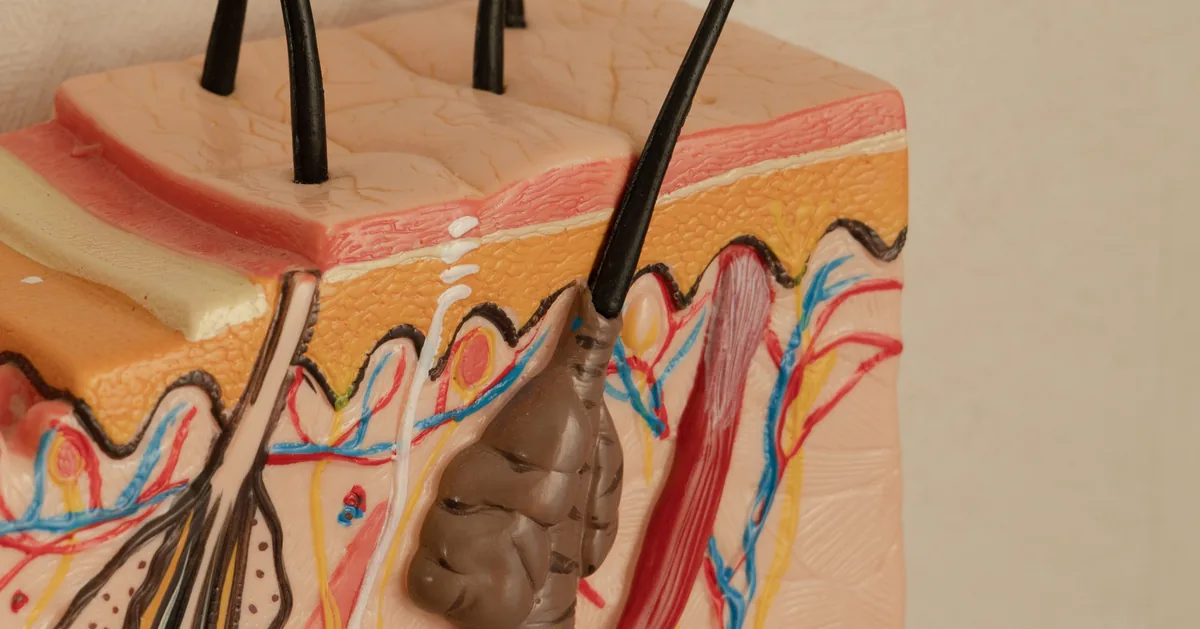
The epidermis is made up of five distinct layers, each with its own role. New cells are born at the bottom and migrate upward, changing as they go, until they reach the surface as the protective shield you can see and touch.
Here’s how the layers stack, from deepest to surface:
Stratum basale — the base layer, where new keratinocytes are made and where melanocytes produce melanin for UV protection.
Stratum spinosum — where cells link together with strong protein bridges, giving skin its flexibility and strength.
Stratum granulosum — where cells begin to harden and produce the lipids that waterproof the skin.
Stratum lucidum — a thin, clear layer found only in the thickest skin, like the palms and soles.
Stratum corneum — the outermost layer: flattened, hardened cells that form the actual barrier, shedding and renewing continuously.
For a clinical breakdown of how these layers are structured, DermNet’s guide to the epidermis is a thorough reference.
The epidermis renews itself through a process called keratinocyte turnover. New cells form in the base layer, then travel up toward the surface over roughly four weeks, hardening into a tough, keratin-rich barrier before they’re shed.
This is your skin’s quiet, constant act of self-repair. Every single day, you’re shedding a layer of spent surface cells and replacing them with fresh ones pushed up from below. It’s why skin can heal, why it can recover, and why it’s never truly “finished.”
Here’s the part most people miss: that renewal cycle slows with age. In your twenties, it runs at a brisk pace; by your forties and beyond, it can stretch out considerably. Slower turnover is part of why mature skin looks duller and takes longer to bounce back.
Supporting that renewal — rather than forcing it with aggressive exfoliation — is one of the kindest things you can do for ageing skin.
FORTIFY
The Naked Chemist
Fortify Barrier Repair Cream
Skin-identical ceramides, cholesterol, and fatty acids in biomimetic ratios — replenish the lipids that hold your barrier together and rebuild resilience in dry, sensitive, or compromised skin.
Best for: dry, reactive, or compromised skin, post-treatment recovery, and anyone rebuilding a depleted barrier.
Your skin barrier lives in the epidermis — specifically in the stratum corneum, where hardened cells and lipids form a protective seal. When people talk about a “damaged barrier,” they’re talking about damage to this layer.
This is where the epidermis stops being abstract anatomy and starts being your actual skin problems. A healthy skin barrier holds moisture in and keeps irritation out. A compromised skin barrier does neither — and that’s when the trouble starts.
The signs are familiar: tightness, flaking, stinging when you apply product, redness that won’t settle, sudden sensitivity to things that never bothered you before—even breakouts. Most “problem skin” is, at its root, a barrier that’s been pushed too far.
And here’s what most brands won’t tell you: the thing that damaged it is usually the skincare itself, which brings us to the mistakes.
The most common cause of a damaged epidermis isn’t neglect — it’s over-treatment. Aggressive exfoliation, too many active ingredients, and harsh cleansing all strip the barrier faster than it can rebuild.
Over-exfoliating — scrubs and daily acids strip the stratum corneum before it can renew, leaving skin raw and reactive.
Active ingredient overload — layering retinol, vitamin C, and multiple acids overwhelms a barrier that can’t keep up.
Harsh, stripping cleansers — that “squeaky clean” feeling is the sound of your lipids being washed down the drain.
Skipping moisture and SPF — leaving the barrier without the lipids and protection it needs to do its job.
This is what I call skin exhaustion — skin that’s been over-stimulated and pushed past the point where it can repair itself. The fix isn’t another active. It’s less.
Founder Insight
Samantha Miller — Clinical Skin Therapist & Founder of The Naked Chemist
“In thirty years on the treatment couch, the single most common thing I’ve seen isn’t dry skin or oily skin — it’s exhausted skin. People arrive doing ten things to their face and wonder why it’s angry. Nine times out of ten, the answer is to stop fighting the epidermis and let it do the job it was built for.”
You support the epidermis by protecting its barrier, not by stripping it. That means gentle cleansing, replenishing the lipids it’s lost, protecting it from UV radiation, and giving its natural renewal cycle room to work.
The most powerful thing you can do is replenish the specific lipids the barrier is built from — ceramides, cholesterol, and fatty acids — in the ratios skin actually uses them. That’s what rebuilds the wall, brick by brick.
As the epidermis ages and its renewal slows, it also loses the cellular vitality that keeps skin firm and luminous. Supporting that deeper renewal — at the level where new cells are made — is where targeted treatment earns its place.
DNA
The Naked Chemist
DNA Age Delay Skin Shot
Peptides, antioxidants, and DNA-repair actives targeting visible ageing at a cellular level — support collagen synthesis and improve skin density over time.
Best for: skin with slowing renewal — dullness, loss of firmness, and fine lines that come with a maturing epidermis.
Once you understand what the epidermis is actually doing — protecting, renewing, holding moisture — most skincare decisions get simpler. You stop reaching for the next aggressive fix and start asking a better question: is this supporting my barrier, or stripping it?
That’s the whole Naked Chemist philosophy. Most skincare treats symptoms. We rebuild the skin itself — starting with the layer that meets the world.
The primary function of the epidermis is protection. It acts as a barrier against irritants, allergens, pathogens, and UV radiation, while retaining moisture in the skin. It also continually renews itself to keep that barrier strong.
The epidermis shields the body from the outside world, retains moisture, produces new skin cells, and produces melanin for UV protection. In short, it’s the layer that keeps everything beneath it safe and functioning.
New keratinocytes are produced in the basal layer and gradually move upward to the surface over roughly 4 weeks. As they rise, they harden into a keratin-rich barrier and are eventually shed, in a continuous cycle of renewal that slows with age.
The epidermis has five layers: the stratum basale, stratum spinosum, stratum granulosum, stratum lucidum (in thick skin only), and stratum corneum. Each plays a role in cell renewal, strength, waterproofing, and barrier protection.
Because almost every common skin concern — dryness, sensitivity, redness, breakouts — traces back to a compromised epidermal barrier. Understanding what this layer does helps you protect it rather than strip it away, as it is the foundation of healthy skin.
There are three layers of skin, but the function of the epidermis is anything but skin-deep. It’s your barrier, your moisture lock, your renewal engine, and your first line of defence — all in the thinnest layer of skin you have. For something we so easily dismiss as the surface, it’s doing the heaviest lifting of all.
Once you understand that, the way you treat your skin starts to shift. You stop chasing the next aggressive active and start asking whether what you’re doing is building this layer up or breaking it down. Because almost every concern people bring to me — the dryness, the sensitivity, the redness that won’t settle, the breakouts that flare from nowhere — traces back to an epidermis that’s been pushed past the point where it can repair itself.
The good news is that this layer is built to recover. It renews itself constantly, and given the right support — gentle cleansing, the lipids it’s made from, protection from the sun, and the patience to let its own cycle work — it will. You don’t need to force it. You need to stop fighting it.
So stop treating the epidermis like wrapping paper. Protect it, feed it the ceramides, cholesterol, and fatty acids it’s built from, and let it do the remarkable job it was designed for. Support the barrier, and the barrier supports everything else.
4 replies on “Function of the Epidermis: What This Skin Layer Does”
Thanks so much, Samantha, for your helpful response. It seems that you advise against using Vit C serum. Does your advice apply only after dermarolling, or do you think it should be avoided under all circumstances? Some say that Vit C is effective on dark spots, and I have age spots on which I would like to try it. Many thanks! Robin
Hi Robin
Vitamin C should only be avoided after microneedling or other treatments that disrupt the barrier other than that it will be great for brightening and lightening. watch this space for our anti pigment paste coming in the next month or so with vitamin C.
Dear Samantha,
So glad to read your sane and scientifically grounded advice. Someone highly recommended dermarolling and I tried it at home. I’m 56 years old, and have many acne scars from my youth. I used .25mm for about 3 months 2 or 3 times a week and then applied Vit C serum right afterwards. I thought it was improving my old scars slightly. Still, I just felt weird about the redness and slight pain I experience afterwards and looked up info on long term side-effects, which led me to your webpage. I’m going to stop doing it now, but I wonder what the long term impact of the damage to my skin would be like going forward. Has the 3 months worth of dermarolling done irreparable damage or would leaving my skin alone help restoring its health? Would the premature aging occur in the next few years? How do I prevent it? Thanks! Robin
Hi Robin. At this stage I am so glad you have stopped the micro-needling, Robin what we know is that for some reason, some people have adverse reactions to this treatment, quite why – well there are a number of reasons to many to mention. here, and this also goes for the results, everyone heals differently, but your skin should slowly heal, just pull back on everything topical less is more, don’t fall into the trap of adding actives especially vitamin C and having aggressive peels etc to try to repair the damage you need your barrier to heal. After 3 months of this treatment, you should know that there are a few stages after treatments that cause injury and in the first stage, the damage is happening anywhere between for 0-6 months but can last up to 8 months. so give your skin time to heal. Samantha