Recipes
Creating Simple Skin Care Lotions
Free Shipping to Australia on orders over $100. Worldwide on Orders over $250. Dismiss
Recently, we’ve been diving into the art of crafting your skincare products.
We’ve covered everything, including which ingredients fit with each process phase.
An essential step in formulating your perfect products.
You can catch up with Step 7 [here] if you missed it.
But today, let’s pause for a quick recap.
We’ll revisit the key ingredients you need for your skin care lotions.
So you’re ready to experiment and create with confidence.
Water typically forms the base of most skin care lotions, making up 60 to 70% of the formula. It is the main ingredient by volume and is essential for creating a smooth, spreadable texture.
It’s important to use distilled water to ensure purity, though water-based ingredients like aloe vera juice or hydrosols (flower waters) can also serve as alternatives.
Water hydrates the skin care lotions, helping other active ingredients penetrate more effectively.
One of water’s key benefits is that it’s highly versatile. You can adjust the amount of water used to influence the consistency of your lotion. If you prefer a thicker cream, you can reduce the percentage of water; for a lighter, runnier texture, you can increase it.
Getting a feel for how much water works best for your desired consistency will take trial and error, so don’t experiment with different ratios until you find your perfect mix.
Understanding water’s properties—such as its ability to hydrate and its role in the emulsion process—can make your formulation process smoother.
Oils and butters are typically the second most common ingredients in skin care lotions. These ingredients provide moisture and help to seal the skin with a protective barrier, preventing water loss. Some of the most popular fats used in lotions are body butters (like shea or cocoa butter), oils derived from nuts, seeds, and grains (almond, coconut, and jojoba), or exotic oils like argan and marula oil.
These fats also contribute to the texture and sensory feel of your lotion. Body butters, for instance, tend to be richer and heavier, making them perfect for dry skin, while lighter oils can create more fluid, breathable formulas. Oils and butters also carry vitamins and antioxidants, which provide additional skin benefits like anti-ageing and moisturising.
If you’re new to creating skin care lotions, we recommend checking out our glossary of botanical oils [link] to learn more about oils’ various properties and how they can benefit different skin types.
One of the challenges of creating a lotion is that oil and water naturally repel each other. To solve this issue, you need an emulsifier. Emulsifiers are compounds that help oil and water come together, forming a stable, smooth lotion. They essentially “bind” the two phases and allow them to blend seamlessly.
When selecting an emulsifier, choosing one compatible with the other ingredients in your formula is essential. Various emulsifiers are available, ranging from simple emulsifying wax to more complex blends.
While the total amount of emulsifier in your formula should stay the same, you can experiment with the ratio of emulsifying wax to conditioning wax to alter the lotion’s texture. This allows you to fine-tune your formulation until you achieve the perfect balance of texture and performance.
Thickeners are used to adjust the lotion’s viscosity. They add consistency and help the product maintain its structure. Many options are available, including Xanthan Gum, Guar Gum, and other plant-based gums. These are natural, effective, and often preferred for their ability to provide a smooth and silky finish to lotions.
The choice of thickener largely depends on personal preference and desired texture. Some thickeners provide a gel-like consistency, while others offer a smoother, creamier feel. Experimenting with different types of thickeners can give your lotion the unique feel and consistency you want.
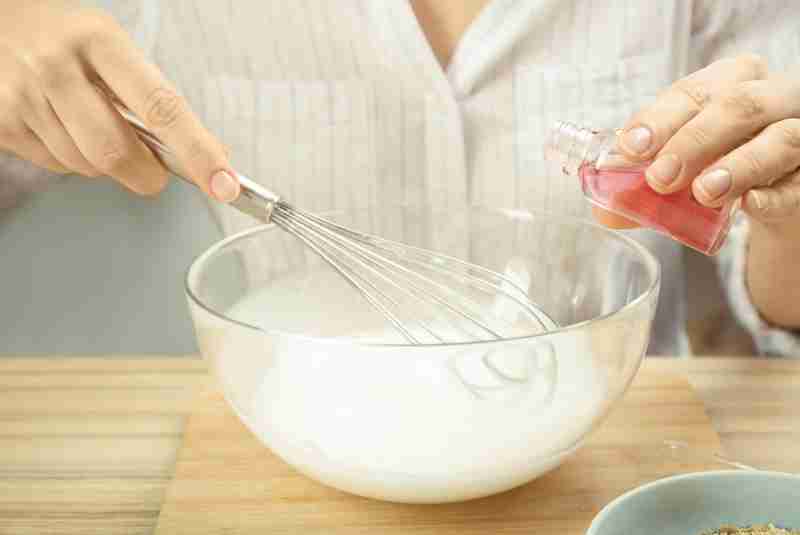
Your lotion’s scent is one of the most noticeable aspects and can play a significant role in the overall experience. You can use essential oils or fragrances to add pleasant scents to your lotions, but remember that both have a flashpoint—meaning if the temperature of your lotion is too high, the smell can evaporate.
Essential oils are great for natural, therapeutic fragrances and offer additional skincare benefits, but they tend to be less stable than synthetic fragrances.
Fragrances might be a better option if you’re looking for a long-lasting scent. To preserve their potency, it is best to add essential oils once the lotion has cooled down slightly, around 120°F (50°C).
Additives are ingredients that you can include to enhance the performance and benefits of your lotion. Some common examples are silk amino acids, ph adjusters like citric acid, humectants like glycerin, and antioxidants such as Vitamin E. Antioxidants help prevent fats and oils from oxidising and going rancid, thus extending the shelf life of your lotion.
Another popular additive is hyaluronic acid, which deeply hydrates and plumps the skin. You can also incorporate botanical extracts for their soothing, healing, or anti-inflammatory properties. The possibilities are endless, so feel free to explore and find what works best for your skin type and goals.
Preserving skin care lotions is crucial, even when using natural ingredients. Without a preservative, your product could become contaminated with bacteria, mould, or yeast, leading to irritation or infection.
The most commonly used preservatives are parabens, but there are also paraben-free options, like phenoxyethanol or Optiphen.
It’s essential to choose a preservative compatible with your lotion. Some preservatives are more ph-sensitive than others.
Check with your supplier to ensure your preservative meets the requirements for your formula. Also, remember that preservatives are most effective when the lotion is at a moderate temperature. If the lotion is too hot, the preservative could lose its efficacy.
Creating your skin care lotions can be a fun and rewarding experience, but it requires a careful balance of ingredients to achieve the right texture, effectiveness, and shelf life.
By understanding the role of each ingredient—from water and fats to emulsifiers, thickeners, and preservatives—you can craft a lotion that is perfect for your skin’s needs. Experiment with different combinations, so be mindful of the specific properties and potential interactions between ingredients.
Whether making a moisturiser or a luxurious, scented body cream, knowing your ingredients inside and out will help you achieve better results every time.
When making lotion, ensure the temperature is not too hot, as preservatives can lose some effectiveness.
Stay tuned for more lessons on making simple skincare lotions and other DIY beauty products.